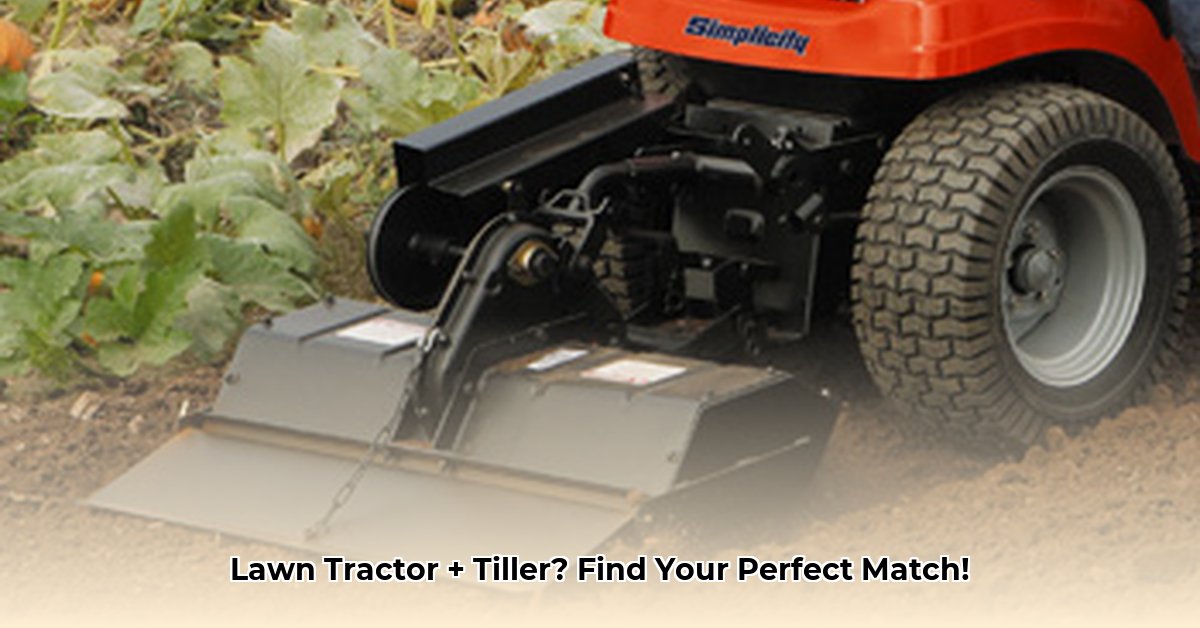
Getting the best lawn tractor with a tiller attachment can dramatically improve your gardening or small-scale farming experience. This guide will help you navigate the selection process, ensuring you choose the right equipment for your needs and gardening style. We'll cover assessing your needs, understanding tiller types and features, adopting sustainable tilling practices, maintaining your equipment, and finally, making an informed purchase. For more detailed information on tillers, check out this helpful resource: Tiller buying guide.
Assessing Your Needs: Matching the Tiller to Your Garden or Farm
Before you even think about specific models, let's assess your individual gardening or farming situation. This crucial first step ensures you choose a tiller that fits your needs, avoids costly mistakes, and maximizes efficiency.
1. Soil Analysis: What type of soil do you have? Sandy loam? Heavy clay? Rocky? Soil type significantly impacts the necessary tiller power. Clay soil, for instance, requires a more powerful tiller than sandy soil. (Consider professional soil testing for precise results).
2. Garden Dimensions: Measure your gardening space. A small vegetable patch requires a smaller, more maneuverable tiller than a large garden or small farm. Accurate measurements will prevent buying an oversized or undersized tiller.
3. Tractor Horsepower: Your lawn tractor's horsepower rating must match or exceed the tiller's requirements. Insufficient horsepower will lead to inefficient tilling and potential damage to your equipment. Always check the tiller's specifications for the minimum horsepower recommendation. (Consult your lawn tractor's manual for its horsepower rating).
Tiller Types and Features: Choosing the Right Tool for the Job
Pull-behind tillers vary significantly in design and functionality. Understanding these differences is essential for selecting the optimal tiller for your specific needs.
Tine Configuration: Tines are the tiller's "teeth." Different tine designs are suited to various soil conditions. Wide, flat tines are ideal for lighter soils, while narrower, aggressive tines are necessary for heavy clay or rocky soil. Cultivator tines offer minimal soil disturbance, ideal for sustainable practices.
Tilling Width: This dictates the area covered in a single pass. Wider tillers are efficient for large areas but might be less maneuverable in confined spaces. Narrower tillers offer superior precision in smaller gardens.
Tilling Depth: Adjustable depth control is a valuable feature, allowing you to customize the tilling depth based on your gardening needs and soil type. Shallower tilling is usually sufficient for established gardens while deeper tilling is often needed when preparing new beds.
Power Requirements: Always match the tiller's horsepower requirements to your tractor’s capabilities. A mismatch can result in inefficient tilling or equipment damage. (Always check the manufacturer's specifications).
Here is a comparison table to help visualize typical tiller types:
| Tiller Type | Ideal Soil Type | Power Requirement (HP) | Pros | Cons |
|---|---|---|---|---|
| Light-Duty Cultivator | Sandy loam, loose soils | 5-10 | Maneuverable, lightweight, budget-friendly | Ineffective on heavy clay or large areas |
| Medium-Duty Tiller | Most soil types | 10-15 | Versatile, good balance of power and maneuverability | Might struggle with extremely dense or rocky soil |
| Heavy-Duty Tiller | Clay, compacted, rocky soils | 15+ | Powerful, effective on challenging soil conditions | More expensive, requires a powerful tractor |
Sustainable Tilling Practices: Gardening with Nature
Sustainable gardening practices minimize soil disruption and promote soil health. Over-tilling can lead to compaction, erosion, and nutrient loss, ultimately harming your garden’s long-term productivity.
Minimize Tillage: Till only when necessary. Excessive tilling damages beneficial soil microorganisms and disrupts soil structure.
Cover Crops: Planting cover crops like clover or rye between growing seasons improves soil health, prevents erosion, and adds nutrients.
Crop Rotation: Rotating crops annually enhances soil fertility and reduces pest and disease problems. This helps reduce the need for extensive tilling.
Maintenance and Repair: Keeping Your Tiller Running Smoothly
Regular maintenance prevents costly repairs and extends the life of your tiller and tractor.
Cleaning: Clean the tiller thoroughly after each use to remove soil and debris, preventing rust and buildup.
Lubrication: Regularly lubricate moving parts as per the manufacturer's instructions.
Tine Inspection: Regularly check for bent or broken tines. Damaged tines impact tilling effectiveness.
Troubleshooting: Familiarize yourself with basic troubleshooting and minor repairs to prevent unnecessary service calls. (Consult your user manual for additional information).
Buying Guide: Making the Right Choice
Purchasing a lawn tractor with a tiller attachment requires careful consideration. Here's a checklist to guide your decision:
Budget: Define a clear budget before starting your search.
Tractor Compatibility: Verify tiller compatibility with your lawn tractor's horsepower and hitch system.
Warranty: A comprehensive warranty demonstrates the manufacturer's confidence in their product.
Reviews: Read online reviews from other users to gain insights into real-world performance and customer service.
Dealer Support: Consider the availability of local support and parts from dealers.
By carefully considering these factors and following the advice in this guide, you can confidently select the perfect lawn tractor with tiller attachment to meet your gardening or small-scale farming needs.